
Yin Yoga for Stress Relief — What To Expect in Your First Class
If you've ever scrolled past a Yin Yoga class and thought "that looks too slow for me" or "I'm not flexible enough for yoga" — this article is for you.
Yin Yoga is one of the most misunderstood styles of yoga out there. It looks simple from the outside — you hold poses for several minutes, there's no flowing movement, no sweating, no complicated sequences. But don't let the stillness fool you. What happens in a Yin Yoga class — in your body, your nervous system, and your mind — is anything but passive.
And for people who are stressed, overwhelmed, or chronically exhausted, it might be the most powerful thing you can add to your week.
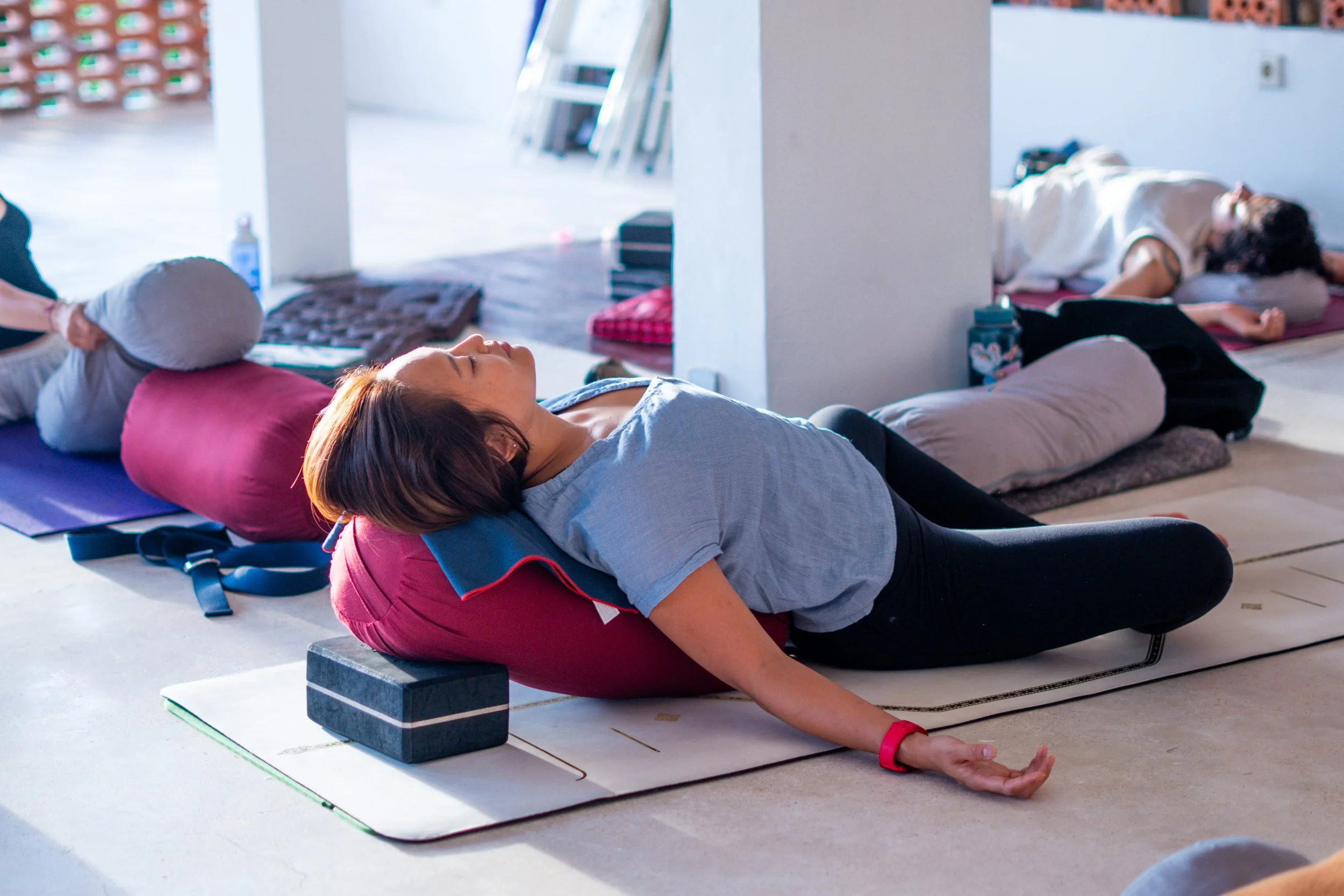
So what actually is Yin Yoga?
Most yoga styles — Vinyasa, Ashtanga, Power Yoga — are what we'd call "Yang" in nature. They're dynamic, warming, and muscular. They build strength and heat in the body, which is wonderful. But they don't address the deeper layers of tension that chronic stress creates.
Yin Yoga works differently. Instead of moving quickly through poses, you settle into them slowly and hold them for anywhere from 2 to 5 minutes. This longer hold targets the connective tissue in your body — your fascia, ligaments, and joints — rather than just your muscles. It's a completely different kind of release.
But the real magic of Yin Yoga isn't just physical. It's what it does to your nervous system.
Why Yin Yoga is so effective for stress
When you hold a Yin pose for several minutes, something interesting happens. Your body initially resists — you feel the stretch, maybe some discomfort, an urge to fidget or escape. And then, gradually, it begins to soften.
This process of meeting discomfort and consciously choosing to stay — calmly, without force — sends a powerful signal to your nervous system. It says: I am safe. I don't need to fight or flee. I can be still.
Over time, this practice literally retrains your nervous system to feel safer in a state of rest. For people who have been running on adrenaline and cortisol for months or years, this is profound. Yin Yoga teaches your body what it has forgotten — how to genuinely relax.
Research backs this up too. Regular Yin Yoga practice has been shown to reduce cortisol levels, lower heart rate, and activate the parasympathetic nervous system — your body's "rest and digest" mode.
What to expect in your first Yin Yoga class
It will feel slow — and that might feel uncomfortable
If you're used to fast-paced yoga or exercise, the slowness of Yin can feel strange at first. You might feel restless, impatient, or even a little bored in the first few poses. This is completely normal. Your nervous system is used to constant stimulation and the stillness can feel unfamiliar.
Give it time. Usually by the second or third pose something shifts — and by the end of class most people feel a depth of calm they haven't felt in a long time.
You'll hold poses for 2-5 minutes
Unlike other yoga styles where you move through poses quickly, in Yin you stay. A typical class might include 6-8 poses total, each held for several minutes. Common poses include supported butterfly, dragon (a deep hip opener), caterpillar (a forward fold), and sphinx (a gentle backbend).
You'll use props — bolsters, blankets, or blocks — to make each pose fully supported so you can completely let go rather than holding yourself up.
You don't need to be flexible
This is the biggest misconception about Yin Yoga. Flexibility is not the goal — release is. You work to your own edge, which looks completely different for every person. Two people can be in the same pose looking entirely different and both be getting exactly what they need.
Your mind will get a workout too
Staying still for several minutes with nothing to do but breathe and notice what's happening in your body is surprisingly challenging for most people. Thoughts arise, emotions surface, the urge to check your phone becomes almost irresistible.
This is where the real practice begins. Learning to observe what comes up without reacting — to be present with yourself without distraction — is one of the most valuable skills Yin Yoga cultivates. And it's a skill that directly translates into how you handle stress in everyday life.
You'll probably feel incredible afterwards
Most people leave their first Yin class feeling a combination of deeply relaxed, slightly emotional, and surprisingly energised. The release of physical tension in your connective tissue combined with the calming effect on your nervous system creates a feeling that's hard to describe until you've experienced it.
Many of my students tell me it's the first time they've felt truly calm in months.
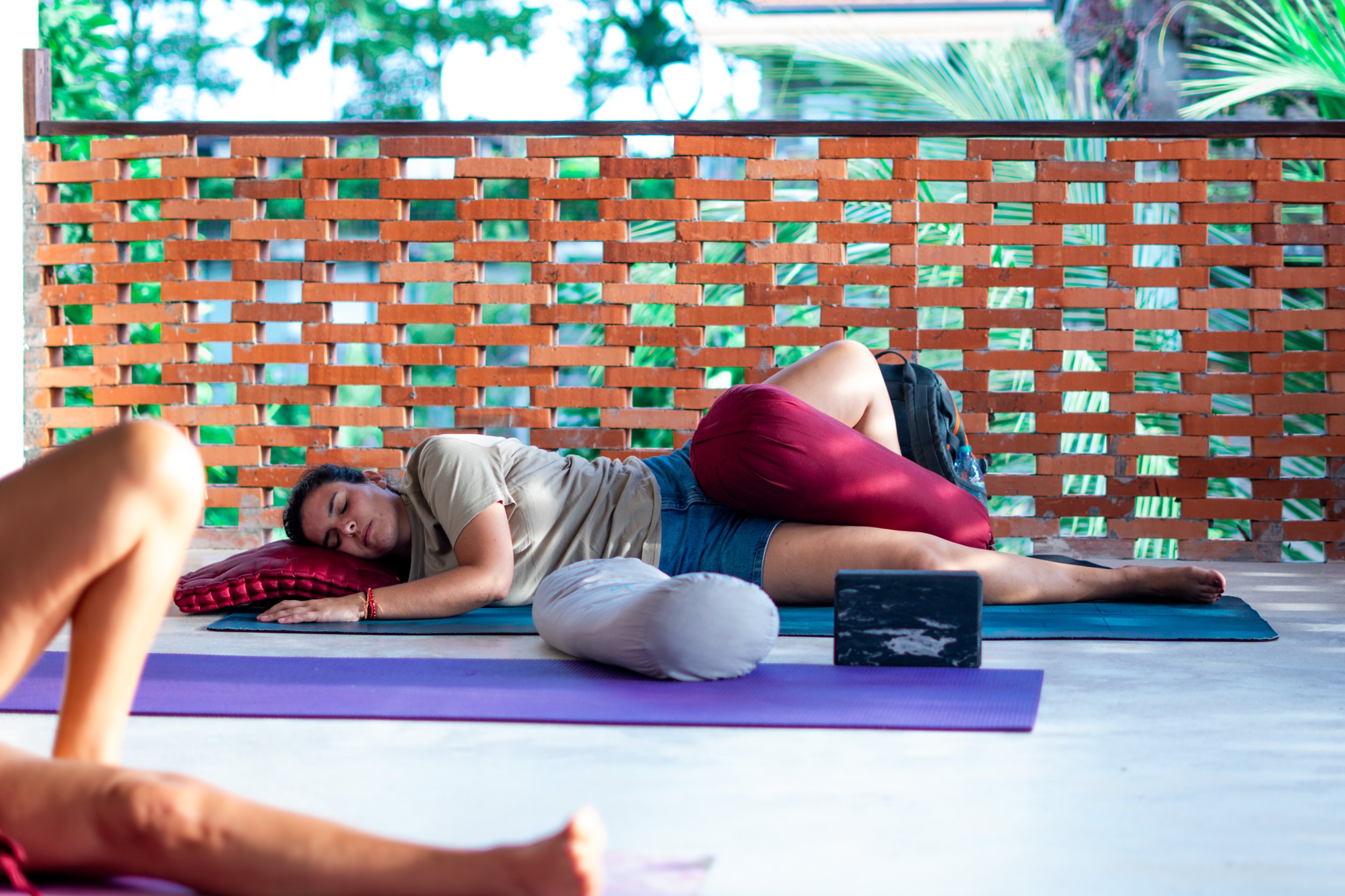
Who is Yin Yoga for?
Yin Yoga is particularly wonderful for:
People who feel constantly stressed, wired, or overwhelmed
Anyone who struggles to slow down or switch off
People with tight hips, lower back tension, or chronic muscle tightness
Those recovering from burnout or exhaustion
Anyone who wants to complement a more active yoga or fitness practice
Complete beginners who want to start yoga gently
It's also a beautiful practice for anyone going through a period of emotional difficulty — grief, transition, uncertainty. The stillness and the breath create a safe container to feel whatever needs to be felt.
How to get started
The best way to experience Yin Yoga is simply to try it. You don't need any equipment beyond a yoga mat, and you don't need any prior experience.
If you're curious about trying Yin Yoga in a supportive, stress-focused environment, I'd love to have you in one of my Online Group Yoga classes — we work with Yin Yoga, Gentle Flows, and Breathwork, all designed around nervous system regulation and stress relief.
Or if you'd prefer something fully tailored to you, my Private Online Yoga sessions are designed entirely around your needs, your body, and what would help you most.
Either way — your nervous system will thank you. 🤍
